Series
Learning To Play How game-playing programs learn, shown on chess, shogi and Go with Kishi: three engines in Rust, trained by self-play on one laptop, measured against engines you can download.
Form
Topic Aerospace AI-assisted engineering AI for operations AI platforms Antiquity Applied security Architecture Art history Chess Cryptocurrency Cryptography Cybernetics Distributed systems Edge systems Energy Enterprise architecture Finance Game AI Games Genetics Geography Go History Insurance Life sciences Linguistics Literature Machine learning Mathematics The open web Operating systems Palaeontology Philosophy Physics Platform automation Policy Programming languages Psychology Reliability Semiconductors Shogi Simulation Sovereignty Space StarCraft Synthetic biology
Technology Durable execution Elixir GPUs Haskell Kubernetes Linux OpenBSD OpenTelemetry Pingora Rust TypeScript WebAssembly Zola
Length Under 10 min 10 to 20 min Over 20 min
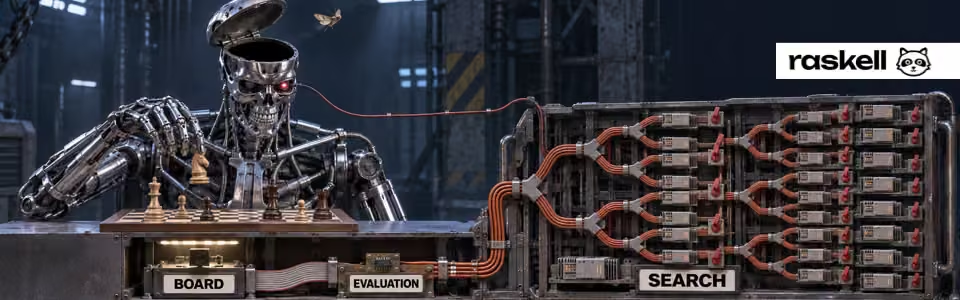
2026 Nov 05 What a chess program is made of, and how far a hand-written one gets against the computer opponent on lichess, before any learning starts.
Game AI Tree search Games Rust Metrics Probability Chess Shogi Go
Oct 25 A chess prodigy's handbook, three old games and one laptop: rebuilding the ideas behind game-playing AI in Rust for a browser on my phone, and measuring them.
Game AI Machine learning Reinforcement learning Games Rust WebAssembly History of technology Chess Shogi Go