Topics · Concept
Agents
LLM agents as software: the loop, tools, context, memory, sandboxes, and the platform underneath them.
- Within
- AI platforms
- Pages
- 20
On the map 20 pages and the topics around it
2026
-
articleBuilding IT Intelligence: A Reference Implementation in One RepositoryEN中한
How to build an Enterprise Context Platform from open source parts: ontology, connectors, workflows, store, API, MCP and UI, in one repository you can run.
27 min read · 16 chapters
-
noteMemory that dreams
A colleague showed me that agent memory should dream before Anthropic published on it. Replay the day, and check the notes against what happened.
-
articleEvaluation Closes the Loop
A trace shows what an agent did, not whether it was right. This part scores the agent against known cases and fails the build when a passing case breaks.
14 min read · 10 chapters
-
noteThe interface that disappears
OpenAI's founders kept pointing to the film Her as a picture of AGI. What they described is the north star for every interface: natural enough to vanish.
-
noteIn vivo, not in vitro
An open question: can intelligence be measured anywhere but in performance? My hunch is that it shows only when an agent acts.
-
articleThe River and the CanalEN中한
Agents explore the rugged world; workflows are what exploration leaves behind. Chess, StarCraft, a factory under the sea, and why I build an engine.
51 min read · 16 chapters
-
articleShiioo, Re-imagined, and the Home AI Lab It Runs On
How I re-imagined Shiioo with what 2026 taught me about agent systems, and why my local setup moves to a Mac Studio and DGX Sparks.
25 min read · 10 chapters
-
noteCitizen entrepreneurs
My friend's answer to the transition: with AI, ordinary people can find a business opportunity, build the business, and run it. He built an idea factory.
-
noteIdeas stop waiting
In 2026 the backlog of ideas I carried for years is turning into things that exist. On why this year feels like a window that will not stay open.
-
articleObservability Is Not Logging
A cost total says nothing about how a run went. This part turns each agent run into a trace: which turn escalated, which tool failed, where the money went.
15 min read · 9 chapters
-
articleThe Bill Is Part of the Loop
Every model response already carries its own bill in the usage field, and the loop throws it away. This post reads that field, prices it against a table, and turns cost into a value the loop can see per turn and act on: a metering decorator that needs no loop change, a running ledger, prompt-cache accounting that moves the number the most, and a budget that degrades before it stops. Part eight of The Agent Platform Handbook.
10 min read · 9 chapters
-
articleThe Model Is a Dependency
Every layer of the harness has existed to put the right tokens in front of one hardcoded model string. This post pulls that string out and makes the model a dependency: why you route a cheap model for easy turns and a strong one for hard turns, what a fallback looks like when a provider is down, and why 'models are commodities' is a claim about your architecture before it is a claim about the market. Part seven of The Agent Platform Handbook.
14 min read · 8 chapters
-
articleMemory Is a Write Path
Retrieval reads context the project authored. Memory is the agent writing context for its own future sessions, and the write is the part that is dangerous. Why session memory comes free from the transcript, why cross-session memory needs a separate write surface, and how to let an agent remember without letting it corrupt its own ground truth. Part six of The Agent Platform Handbook.
19 min read · 14 chapters
-
articleRetrieval Is a Tool, Not a Layer
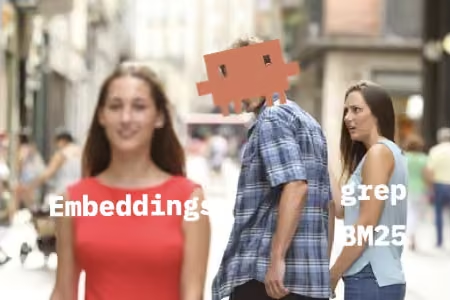
Loading the whole .AGENTS/ directory on every turn does not scale. The fix is not a retrieval layer bolted to the side of the agent. It is a search tool in the registry the agent already has. BM25 over project docs, no vector store, and an honest account of when embeddings start to earn their keep. Part five of The Agent Platform Handbook.
16 min read · 11 chapters
-
articleContext Is the Product
Models are commodities. Context is not. The sources of context an agent draws on, why retrieval alone is not enough, and a minimal .AGENTS/ convention that loads context from disk into the same harness we have been building. Part four of The Agent Platform Handbook.
26 min read · 15 chapters
-
articleTools: How Agents Actually Do Things
Function calling is the API between language and action, but the engineering is in the registry. A working four-tool registry in TypeScript on Bun, schema design that survives model drift, parallel tool calls, and the failure modes nobody mentions in the demo. Part three of The Agent Platform Handbook.
13 min read · 10 chapters
-
articleYour Agent Wants Root
An agent with a shell tool is arbitrary code execution with a friendly face. A short tour of why Docker alone is not enough, what Firecracker, gVisor, and Kata actually solve, and a hardened sandbox you can wrap the post-one agent in today. Part two of The Agent Platform Handbook.
16 min read · 9 chapters
-
articleWhat an Agent Actually IsEN中한
AI agent is the most overloaded word in the industry. This is the anatomy, the lineage, and a working implementation in roughly two hundred lines of TypeScript on Bun. Part one of The Agent Platform Handbook.
19 min read · 8 chapters
-
articleWhat Sixteen AI Agents Taught Me About Management
What happens when you give sixteen AI agents an org chart, a reporting structure, and a token budget. A story about orchestration, management, and running out of runway.
19 min read · 11 chapters
-
articleNotes from RSAC 2026
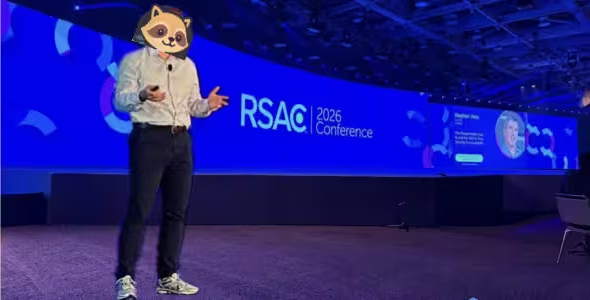
Third time at RSA Conference, first time as a speaker. What I saw, what I heard, and what I am still processing.
23 min read · 11 chapters