Topics · Concept
Future of work
What AI does to jobs and livelihoods: the interval before any post-scarcity economy, basic income against basic access, and who gets through the middle.
- Within
- Economics, Social reform
- Includes
- Post-scarcity
- Pages
- 6
On the map 6 pages and the topics around it
2026
-
noteSmall, focused, high-trust
Altman wanted OpenAI to stay small. Every large group spends more of its work holding itself together, and AI may change that arithmetic.
-
noteSomething closer to a religion
In 2013 Sam Altman wrote that great founders create something closer to a religion. Karen Hao reads it as a warning; I read it as a forecast.
-
articleIT Intelligence: The Missing Data Layer of Enterprise ITEN中한
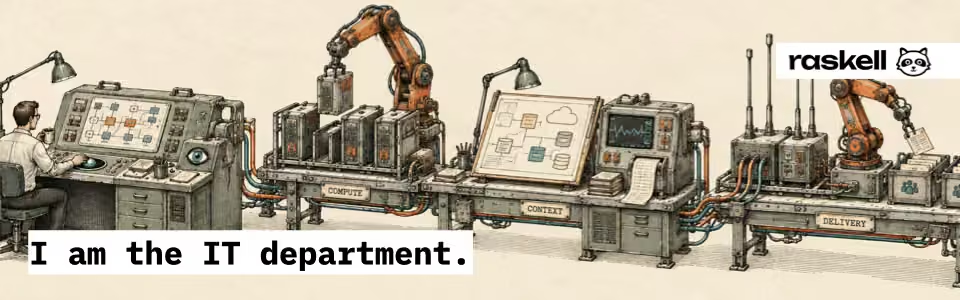
Business intelligence tells a company how it sells. Nothing tells it how its IT fits together. Why I started building an Enterprise Context Platform.
50 min read · 21 chapters
-
noteCitizen entrepreneurs
My friend's answer to the transition: with AI, ordinary people can find a business opportunity, build the business, and run it. He built an idea factory.
-
noteThe move to the city
Urbanisation was miserable for the people who lived through it and better for everyone who came after. The argument about AI and work has the same shape.
-
noteThe tumult in between
If AI ends in post-scarcity, the dangerous part is the interval: jobs going before goods become nearly free, with no agreed idea of where the ship steers.